Best Non GamStop Casino UK 2026
Loading...
A deposit in two taps is the standard. A withdrawal within twenty-four hours is the exception worth looking for. That gap between how easy it is to put money in and how long it takes to get money out is the single most telling feature of any casino app’s payment system — and the one most players discover too late.
The UK payment landscape for casino apps was reshaped in April 2020 when the Gambling Commission banned credit card gambling. That single regulatory decision removed the most dangerous payment method from the equation and shifted the market towards debit cards, e-wallets, and mobile payment systems. Apple Pay, which was already popular among iPhone users, became the default deposit method for a significant portion of the UK market. PayPal, already established in UK online commerce, cemented its position as the preferred e-wallet for gambling transactions.
This guide covers every major payment method available on UK casino apps, from the deposit process to the withdrawal timeline, including the fees, limits, and processing quirks that the marketing pages tend to leave out. The focus is practical: which methods are fastest, which are cheapest, and which give you the most control over your money at every stage of the process.
Speed matters on both sides of the transaction. A fast deposit is convenient. A fast withdrawal is a feature that directly affects your experience and, arguably, your ability to manage your bankroll responsibly. The longer money sits in a pending state, the higher the temptation to reverse the withdrawal and keep playing. Operators know this, and the best ones have shortened their processing times accordingly.
Apple Pay at UK Casino Apps
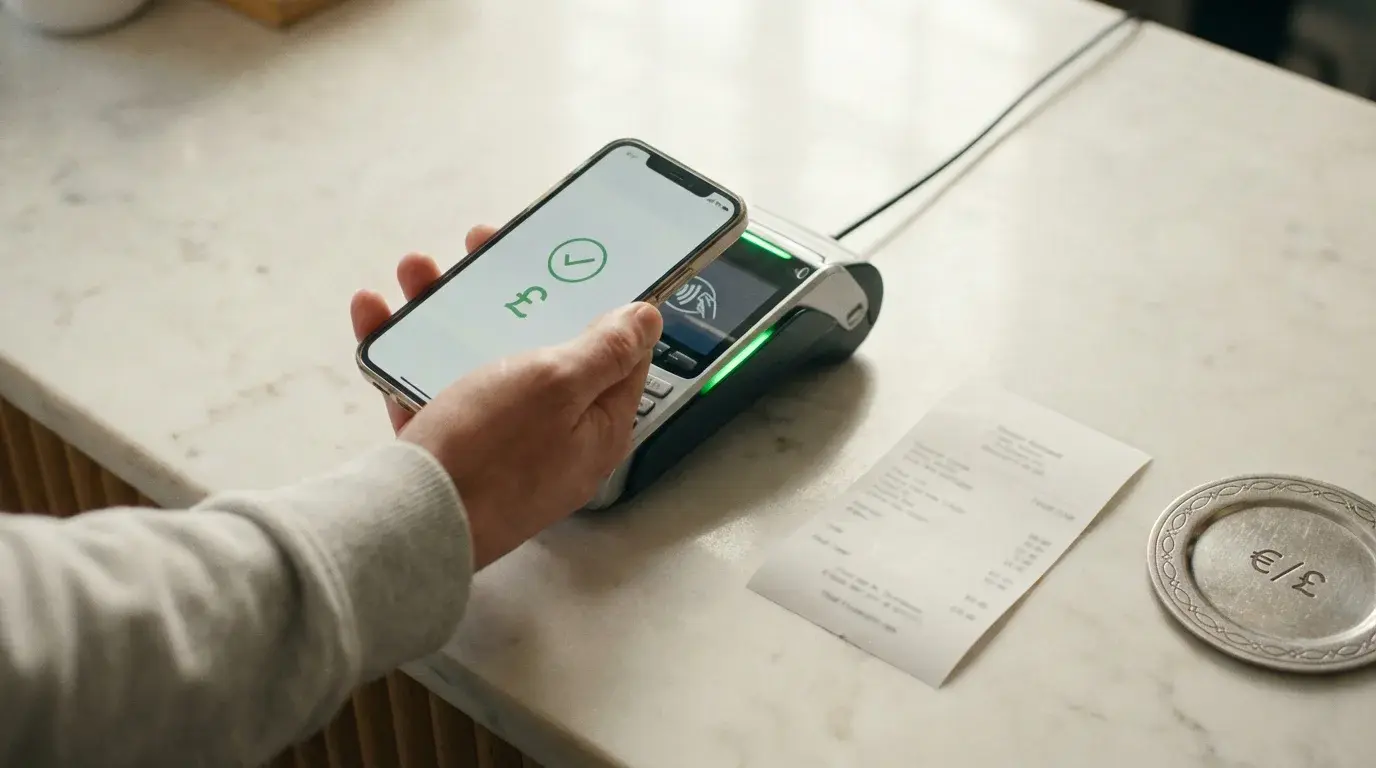
Apple Pay turned the casino deposit into a gesture that takes less than a second. Double-click the side button, glance at Face ID, and the money moves. No card numbers to type, no redirects to a bank’s verification page, no waiting. For iPhone users, it is the most frictionless deposit method available on any UK casino app, and the adoption rate reflects that.
The technology behind it is straightforward: Apple Pay uses a tokenised version of your debit card, so the casino never receives your actual card number. This adds a layer of security that is meaningful — if the operator’s database is compromised, your card details are not exposed. The transaction appears on your bank statement like any other Apple Pay purchase, though some banks may flag gambling transactions separately.
Setting Up Apple Pay for Casino Deposits
If you already use Apple Pay for everyday purchases, no additional setup is needed. Open the casino app, navigate to the deposit screen, select Apple Pay as your method, enter the amount, and confirm with Face ID or Touch ID. The process is identical to paying in a shop — the casino’s payment system handles the rest.
If Apple Pay is not yet configured on your iPhone, the setup takes about two minutes. Open the Wallet app, tap the plus icon, and follow the prompts to add a debit card. Your bank will verify the card — usually via a text message code or a notification in your banking app — and once confirmed, the card is ready to use for casino deposits. Only debit cards work for gambling transactions in the UK; the credit card ban applies to Apple Pay just as it does to direct card payments.
One thing to check before your first deposit: not every UK casino app supports Apple Pay, though the majority of major operators do. If Apple Pay is not listed in the deposit options, the app either has not integrated it or your specific card issuer does not support Apple Pay transactions with that operator. In either case, PayPal or a direct debit card payment will work as alternatives.
Apple Pay Withdrawal: What to Expect
Withdrawals via Apple Pay are less universal than deposits. Some operators support Apple Pay withdrawals, routing the money back to the linked debit card. Others do not, requiring you to choose an alternative method — typically a direct bank transfer or PayPal — for cashing out. This asymmetry is common across the industry and is not a red flag in itself, but it is worth knowing before you deposit.
Where Apple Pay withdrawals are supported, the processing time is generally comparable to a standard debit card withdrawal: one to three business days after the operator’s internal processing is complete. The actual speed depends on the operator’s pending period (the time between requesting a withdrawal and the operator initiating the payment) and your bank’s processing time for incoming transactions. Some banks credit Apple Pay refunds within hours; others take the full three days.
If fast withdrawals are a priority, PayPal currently outperforms Apple Pay on speed for most UK casino apps. Apple Pay deposits are faster, but PayPal withdrawals tend to arrive twelve to twenty-four hours sooner on average.
PayPal, Debit Cards and Bank Transfers
Beyond Apple Pay, three payment methods dominate the UK casino app market: PayPal, debit cards, and bank transfers. Each has a distinct profile in terms of speed, limits, and the degree of separation between your casino account and your primary bank account. A fourth option — Pay by Phone Bill — exists for deposits only and occupies a specific niche.
Bank transfers (also known as wire transfers or Faster Payments) deserve a separate mention. They are available at most operators for both deposits and withdrawals, and they connect your bank account directly to the casino without an intermediary. Deposit speed varies: Faster Payments can be near-instant, while traditional bank transfers take one to three business days. Withdrawal processing is typically slower than PayPal — two to five business days is standard. The advantage of bank transfers is that they usually carry the highest limits of any payment method, making them the default for large transactions. The disadvantage is the direct exposure of your bank details to the operator, though GDPR and UKGC data protection rules mitigate this risk at licensed platforms.
PayPal: Speed vs. Limits
PayPal is the gold standard for withdrawal speed on UK casino apps. Deposits are instant. Withdrawals, once approved by the operator, typically arrive in your PayPal balance within two to twenty-four hours — significantly faster than any card-based method. The money sits in your PayPal account, from where you can transfer it to your bank or spend it directly.
The advantages extend beyond speed. PayPal acts as a buffer between the casino and your bank account: the operator never sees your bank details, and the transaction on your bank statement shows a transfer to or from PayPal rather than a gambling site. For players who want a degree of financial privacy, this is meaningful.
The limitations are primarily around limits and availability. PayPal deposit limits on casino apps are typically lower than debit card limits — often capped at £5,000 to £10,000 per transaction, though this varies by operator. Not every UKGC-licensed casino app accepts PayPal; the payment company maintains its own list of approved operators and periodically removes casinos that do not meet its standards. This is actually a secondary layer of vetting that benefits the player.
Debit Cards: The Default Option
Visa and Mastercard debit cards are accepted at virtually every UK casino app. Deposits are processed instantly in most cases, though some banks impose a brief hold on gambling transactions. Withdrawals to debit cards take one to five business days, with three days being the typical timeframe after the operator initiates the payment.
The main advantage of debit cards is universality — you do not need a separate account or wallet, just the card issued by your bank. The main disadvantage is speed on the withdrawal side: card withdrawals are consistently slower than PayPal or dedicated e-wallets. If you deposit with a debit card and later want to withdraw to PayPal, most operators require that your first withdrawal goes back to the original deposit method, up to the amount deposited. Anything beyond that can be withdrawn via your chosen method.
Pay by Phone Bill
Pay by Phone Bill services like Boku let you deposit by charging the amount to your mobile phone bill or deducting it from your prepaid balance. The process is simple — enter your phone number, confirm via SMS — and the deposit appears instantly. Limits are low, typically £30 per day, which positions this method squarely for small, casual deposits.
The critical limitation: Pay by Phone is deposit-only. You cannot withdraw to a phone bill. Any winnings must be cashed out via a different method, which means you need a secondary payment option set up in advance. The low deposit ceiling and one-directional nature make this a niche tool rather than a primary payment method.
Withdrawal Processing: Why It Takes Longer Than You Think
“Instant withdrawal” almost always means instant after verification — and the verification can take hours or, for first-time withdrawals, days. The journey from tapping “Withdraw” to seeing money in your account involves multiple stages, each with its own timeline, and understanding these stages is essential if you want to set realistic expectations.
The process typically works like this: you request the withdrawal in the app. The request enters a pending period, during which the operator reviews it internally. Once approved, the operator initiates the payment via your chosen method. The payment provider then processes the transaction and delivers the funds to your account. Each stage has a separate duration, and the total is the sum of all of them — not just the last step.
KYC and First Withdrawal Delays
Know Your Customer verification is legally required for all UKGC-licensed operators, and it is most acutely felt at the point of your first withdrawal. The operator must confirm your identity, your age, and the source of your funds before releasing any money. This usually involves uploading a photo ID (passport or driving licence), a proof of address (utility bill or bank statement), and sometimes a photo of the payment method used to deposit.
The verification process can take anywhere from a few hours to seventy-two hours, depending on the operator’s staffing and the clarity of the documents you provide. Some operators now use automated verification tools that can approve standard documents within minutes, but edge cases — blurry photos, addresses that do not match, expired documents — still require manual review.
The practical impact is significant for your first withdrawal. A player who deposits, plays, wins, and requests a withdrawal all on the same day may find the money stuck in verification for two or three days. Subsequent withdrawals, once your identity is confirmed, are processed much faster — often within the same business day.
How to Speed Up Your Withdrawals
The single most effective thing you can do is complete KYC verification before you need to withdraw. Most casino apps allow you to upload documents immediately after registration, and doing so means your first withdrawal will not trigger a verification delay. It takes five minutes and saves days.
Beyond KYC, choose PayPal or an e-wallet as your withdrawal method for the fastest processing. Avoid withdrawing on weekends or bank holidays — many operators do not process payments outside business hours, even if their automated systems accept the request. Withdraw in round amounts to avoid triggering additional manual reviews that some operators apply to unusual transaction sizes.
Finally, do not reverse your withdrawal. Most operators offer a pending period — usually twelve to forty-eight hours — during which you can cancel the withdrawal and return the funds to your casino balance. This feature exists because operators know that a percentage of players will cancel and continue playing. If you have decided to cash out, let the withdrawal complete. The pending period is a test of discipline, not a convenience feature.
Deposit and Withdrawal Limits Compared
Minimums and maximums are not a whim of the operator — they are part of the business model. Deposit limits determine who can play and at what level. Withdrawal limits determine how quickly you can access your winnings. Both vary significantly between operators and between payment methods within the same operator.
On the deposit side, minimum amounts typically range from £5 to £20 depending on the method. Apple Pay and debit cards usually have the lowest minimums (£5 to £10). PayPal minimums vary but commonly sit at £10. Pay by Phone has its own daily cap, typically £30 to £40. Maximum deposit limits per transaction range from £5,000 to £20,000 for most methods, though high-roller accounts may negotiate higher ceilings with the operator directly.
Withdrawal limits are where differences become more consequential. Many operators impose daily, weekly, and monthly withdrawal caps. A daily limit of £5,000 and a monthly limit of £30,000 are common among mid-range casino apps. Progressive jackpot wins are sometimes exempt from these caps, but not always — check the specific terms before you play a jackpot game with the expectation of a life-changing payout being available in a single withdrawal.
Low withdrawal limits are not necessarily a red flag, but they are a signal. An operator that caps withdrawals at £2,000 per week is either managing cash flow tightly or discouraging large withdrawals. Neither interpretation is flattering. Conversely, very high limits combined with a small or unknown operator can indicate other risks. The most reliable benchmark is to compare the limits of the operator you are considering against those of established, well-known UK casino apps.
One often-overlooked detail: the minimum withdrawal amount. Most operators set it at £10 to £20, but some set it higher. If you have a balance of £15 and the minimum withdrawal is £20, you either need to keep playing to reach the threshold or forfeit the remaining balance. This is a minor issue for most players but can matter if you are managing a small bankroll deliberately.
Why the Credit Card Ban Matters
Since April 2020, no UKGC-licensed casino has been permitted to accept credit card deposits. The ban was introduced after research showed a strong correlation between credit card gambling and problem gambling — players were effectively borrowing money to gamble, accumulating debt that compounded through interest charges, and falling into cycles that debit-funded gambling rarely produces.
The ban applies to all forms of credit, including credit cards used through Apple Pay or PayPal. If your PayPal account is funded by a credit card, the casino’s payment processor will typically block the transaction or, if it goes through, the operator risks a regulatory penalty. The system is not perfect — some edge cases exist — but the principle is enforced consistently across the licensed UK market.
From a player protection standpoint, the credit card ban is one of the most impactful regulatory decisions the UKGC has made. It draws a hard line between gambling with money you have and gambling with money you do not have. Every other responsible gambling tool — deposit limits, session timers, self-exclusion — is optional and depends on the player’s willingness to use it. The credit card ban is automatic and universal. You cannot opt out of it, and that is precisely the point.
If you encounter a casino app that accepts credit card deposits, it is either not UKGC-licensed or it is violating its licence conditions. In either case, the appropriate response is the same: do not deposit, and do not return.
The Cash Flow Mindset
Money in a casino app should move quickly and transparently. Everything else is a reason to reconsider. The deposit side of the equation is largely solved — Apple Pay, PayPal, and debit cards all offer instant or near-instant deposits with minimal friction. The withdrawal side is where operators differentiate themselves, and it is where your attention should focus when choosing an app.
Look for operators that process withdrawals within twenty-four hours, offer multiple withdrawal methods without excessive restrictions, and do not impose unreasonable pending periods. Complete your KYC verification immediately after registration, before you have anything to withdraw. Match your deposit and withdrawal methods to your priorities — speed, privacy, or limit flexibility — and set up your preferred options during registration rather than at the point of cashing out.
The way a casino app handles your money tells you how it views its relationship with you. Operators that make deposits effortless and withdrawals difficult are optimising for retention at the expense of trust. Operators that make both sides of the transaction smooth are building a platform designed for players who come back by choice, not by frustration. Choose accordingly.